
- 3001 W. Big Beaver Road, Suite 600
Troy, MI 48084
248|645-9400
248|645-9344 fax


5th Jan 2026

When a family member passes away, their property, accounts, and personal belongings must be legally transferred to the right people. In Michigan, this court-supervised process is called probate. It may sound intimidating, but with the right guidance, it can be managed smoothly.
I’m Matt Haupt, a probate attorney with Beier Howlett in Troy, Michigan. I help personal representatives and beneficiaries throughout Oakland County navigate the probate process from start to finish. Whether you are opening an estate, handling debts, or preparing the final accounting, I work with you to keep the process clear, efficient, and legally sound.
Call me at (248) 282-1063 or email me at mhaupt@bhlaw.us.com to schedule a consultation.
What is Probate in Michigan?
Probate is the legal process used to manage a deceased person’s estate. That includes identifying assets, paying valid debts, and distributing what remains to heirs or beneficiaries.
In Oakland County, probate matters are handled by the Oakland County Probate Court in Pontiac. In Macomb County, probate matters are handled by the Macomb County Probate Court in Mount Clemens. Each county in Michigan has its own probate court, but the rules come from Michigan’s probate code.
Not every asset must go through probate. For example, property held jointly with rights of survivorship or accounts with named beneficiaries may pass outside the court process. Part of my role as a probate lawyer in Troy is to help families understand what must be probated and what can transfer more directly.
Opening a Probate Case in Oakland County
The first step is filing a petition or application to open an estate in probate court. The court then appoints a personal representative (sometimes called an executor) to oversee the estate.
*If there is a valid Will, it usually names who should serve as personal representative.
*If there is no Will, Michigan law sets the order or priority for who may serve.
Once appointed, the personal representative has legal authority and responsibility to act on behalf of the estate.
Duties of a Personal Representative
The personal representative’s job can be demanding. Common tasks can include:
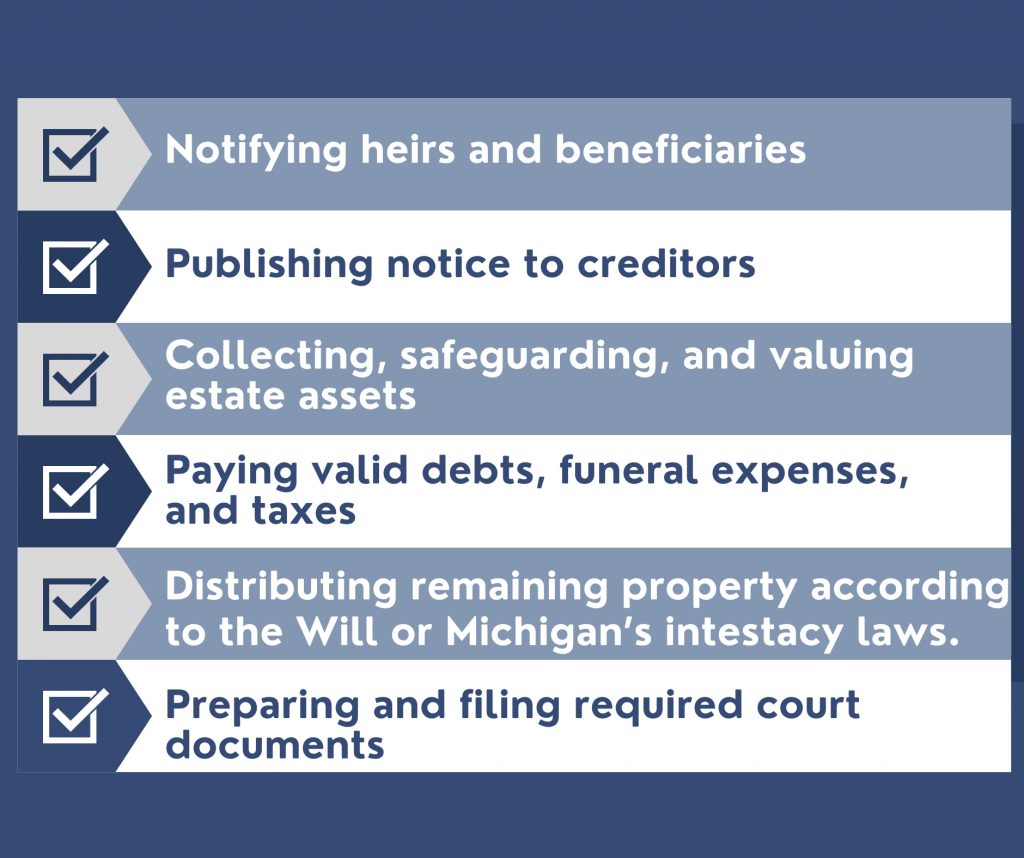
As a probate attorney, I work closely with personal representatives to make sure every duty is met and deadlines are followed, reducing the risk of personal liability.
Probate When There is a Will
If the decedent left a Last Will and Testament, it must be filed with the court. Copies are also provided to all interested parties, which include:
- The people named to inherit under the Will;
- Trustees of any trusts created by the Will;
- Heirs who would inherit if there were no Will;
- The nominated personal representative.
Even relatives excluded from the Will must be notified, giving them a chance to raise objections.
If the Will is uncontested, the estate moves forward under its terms. If the Will is challenged, the court may hold hearings and examine evidence on issues such as undue influence, fraud, or competing Wills.
Probate Without a Will in Michigan
When someone dies intestate (without a Will), Michigan’s inheritance laws decide who receives the estate. The personal representative still manages the same duties, but instead of following written instructions, they follow the order of heirs set by statute.
This typically means assets pass first to a surviving spouse and children, then to parents, siblings, or more distant relatives if necessary.
Administering, Paying Debts, and Distributing the Estate
After appointment, the personal representative manages the estate on a day-to-day basis. This includes maintaining property, managing accounts, and sometimes seeking court approval to sell assets or resolve disputes.
Before heirs or beneficiaries receive their inheritance, the estate must pay outstanding obligations. These may include:
- Funeral costs;
- Medical bills;
- Taxes;
- Creditor claims; and/or,
- Administrative expenses.
Only after debts are settled does the personal representative distribute what remains. If there is a Will, the distributions follow its instructions. If not, Michigan’s intestacy rules control.
Closing the Estate in Probate Court
The last step in probate is preparing a final report or accounting that shows how the estate was handled. After the court approves and confirms that debts are settled and distributions are made, the estate can be closed. At this point, the personal representative is released from further responsibility.
Do You Need a Probate Lawyer in Troy?
Even when probate seems straightforward, the process can be complex and time-consuming. Personal representatives face deadlines, paperwork, and potential personal liability if mistakes are made. Beneficiaries often need guidance to make sure their rights are protected.
As a probate attorney in Troy, Michigan, I help clients:
- File and confirm Wills with the court;
- Provide notice to heirs and beneficiaires;
- Identify, secure, and value estate assets;
- Handle creditor claims and tax issues;
- Prepare and submit required court filings;
- Transfer property to heirs and beneficiaries; and,
- Complete the final accounting and close the estate.
If you are serving as a personal representative or are a beneficiary of an estate, I can guide you through the probate process with confidence and clarity. Contact Matt Haupt today at (248) 282-1063 or email at mhaupt@bhlaw.us.com to schedule a consultation.
Written by Matt Haupt
Related Articles